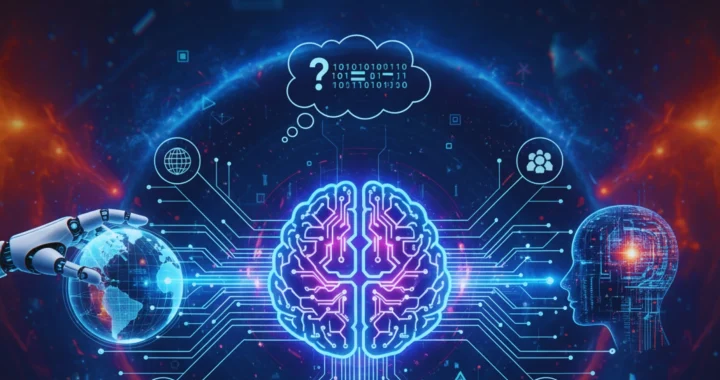
What Artificial Intelligence Means?
In recent times, Artificial Intelligence( AI) has converted from a futuristic conception into a part of our everyday lives. From voice sidekicks like Siri and Alexa to advanced technologies like tone- driving buses and smart recommendations, AI is far and wide. But what exactly does artificial intelligence mean, and why is it so important? Let’s break it down.
1. Understanding Artificial Intelligence
Artificial Intelligence refers to the capability of machines or software to pretend mortal intelligence — that means literacy, logic, problem- working, and understanding language.
In simpler terms, AI enables computers to suppose and act like humans, but with important faster processing power.
Key characteristics of AI include:
- Learning : AI systems learn from data and ameliorate over time.
- Logic : They dissect information to make logical opinions.
- Perception : AI can fete images, voices, and patterns.
- Interaction : numerous AI tools communicate naturally with humans.
AI is not just a single technology it’s a broad field that includes machine literacy, natural language processing, robotics, and more.
2. The History and elaboration of AI
The conception of artificial intelligence dates back to the 1950s when scientists first began exploring whether machines could “ suppose. ” Over the decades, technological advancements have taken AI from simple algorithms to intelligent systems able of deep literacy.
Key mileposts in AI elaboration :
- 1950s : Alan Turing introduces the conception of machine intelligence.
- 1997 : IBM’s Deep Blue defeats chess champion Garry Kasparov.
- 2011 : IBM Watson wins the quiz show Jeopardy!.
- Today : AI powers chatbots, robotization, and prophetic analytics in nearly every assiduity.
AI has evolved from theoretical exploration into a important tool that drives invention and decision- making worldwide.
3. Types of Artificial Intelligence
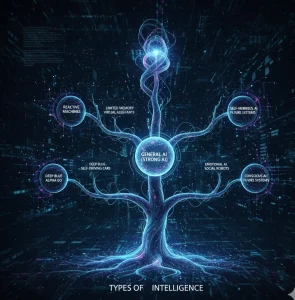
Artificial Intelligence can be distributed grounded on its capabilities and functions.
Narrow AI( Weak AI) :
This type of AI is designed for specific tasks, similar as facial recognition or virtual sidekicks.
Example Google Hunt, Netflix recommendations, and Siri.
General AI( Strong AI) :
A more advanced form of AI that can suppose, learn, and perform any intellectual task like a mortal.
Note General AI is still in the exploration phase.
Super intelligent AI :
A academic position of AI that surpasses mortal intelligence — able of creativity, feelings, and tone- mindfulness.
illustration This conception is frequently seen in wisdom fabrication pictures.
Understanding these orders helps us see where AI stands moment and where it might go in the future.
4. Real- World operations of AI
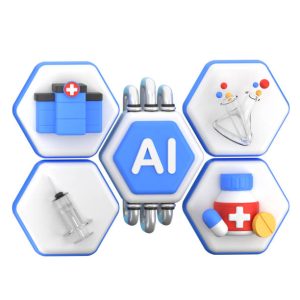
AI is formerly transubstantiating diligence across the globe.
Popular operations include :
- Healthcare : Predicting conditions, assaying medical reviews, and bodying treatment.
- Finance : Fraud discovery, credit scoring, and algorithmic trading.
- Retail : Product recommendations and force operation.
- Education : Personalized literacy and AI- driven training.
- Transportation : Self- driving buses and route optimization.
Everyday tools like Google Charts, YouTube, and dispatch spam pollutants also use AI behind the scenes.
5. Benefits of Artificial Intelligence
AI offers multitudinous advantages that make businesses and diurnal life more effective.
Major benefits include :
- Robotization : Reduces mortal error and pets up tasks.
- Data Analysis : Processes large datasets in seconds.
- Cost effectiveness : Saves time and coffers.
- Personalization : Delivers customized stoner gests .
- Innovation : Drives advancements in wisdom and technology.
With AI, companies can make smarter opinions, and individualities enjoy further convenience and effectiveness.
6. Challenges and Ethical enterprises
While AI offers great pledge, it also raises Ethical and Social questions.
Crucial challenges include :
- Job displacement : robotization may replace certain places.
- Data Privacy : AI systems calculate heavily on particular data.
- Bias : Algorithms can reflect being mortal prejudices.
- Control : icing humans maintain authority over AI systems.
Addressing these issues responsibly is essential to insure AI benefits everyone inversely.
7. The Future of Artificial Intelligence
AI’s future looks incredibly bright. With ongoing research, we can expect more intelligent, adaptive, and ethical AI systems that enhance human life rather than replace it.
Predicted future trends :
- AI in climate change and sustainability.
- Smarter healthcare and predictive medicine.
- Advanced robotics and independent vehicles.
- Developed human- AI collaboration.
AI will continue shaping the way we live, work, and interact — making the world smarter, safer, and more connected.
Conclusion
Artificial Intelligence is not just a technological invention it’s a revolution that’s reconsidering diligence and human potentiality. It means machines learning to think, adapt, and evolve, just like humans, but faster and smarter.
As AI continues to advance, understanding what it truly means helps us embrace its eventuality while preparing for its challenges.
In short, AI represents the future — and the future is already here.