When Artificial Intelligence Started ?
The Beginning of a Technological Revolution
Artificial Intelligence (AI) is one of the most revolutionary fields of technology, influencing everything from smartphones to self-driving cars. But have you ever wondered — when did artificial intelligence actually start?
The journey of AI began decades ago, fueled by human curiosity and the dream of creating machines that could “think” like humans. Let’s take a closer look at how it all began and evolved over the years.
1. What Is Artificial Intelligence?
Before exploring the timeline, it’s important to understand what Artificial Intelligence means.
AI (Artificial Intelligence) refers to the ability of machines to perform tasks that normally require human intelligence. These include:
-
Learning from data (machine learning)
-
Recognizing speech and images
-
Making decisions
-
Solving problems
-
Understanding natural language
In short, AI enables machines to simulate human-like behavior — and this concept has been evolving for over 70 years.
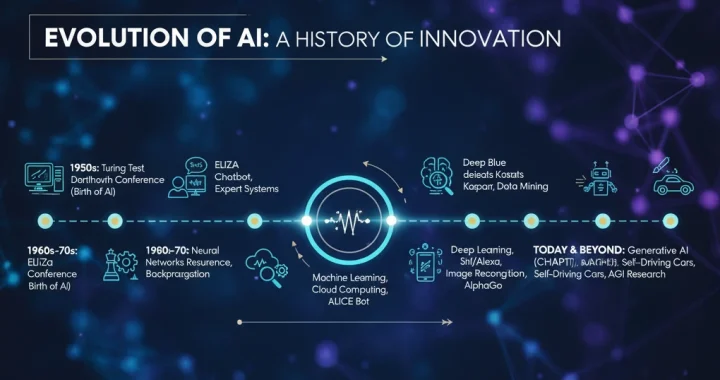
2. The Early Ideas: The 1940s – 1950s
The roots of AI can be traced back to the 1940s and 1950s, when scientists began exploring whether machines could “think.”
Key milestones during this period:
-
1943: Warren McCulloch and Walter Pitts proposed the first mathematical model for neural networks — the foundation of AI.
-
1950: Alan Turing published his famous paper “Computing Machinery and Intelligence”, introducing the Turing Test — a way to determine if a machine can think like a human.
-
1951: The first AI program, a checkers-playing algorithm, was developed by Christopher Strachey.
This era laid the groundwork for what would become a major scientific movement — the birth of artificial intelligence.
3. The Birth of AI as a Field: The 1956 Dartmouth Conference
The official birth of AI as a scientific discipline happened in 1956.
At the Dartmouth Conference, computer scientists John McCarthy, Marvin Minsky, Nathaniel Rochester, and Claude Shannon gathered to discuss the possibility of creating machines that could think and learn.
This event marked the beginning of Artificial Intelligence as a formal research field.
Fun fact: It was at this conference that John McCarthy coined the term “Artificial Intelligence.”
4. Growth and Challenges: 1960s to 1980s
After the Dartmouth Conference, AI research gained momentum — but not without challenges.
1960s – The AI Boom:
-
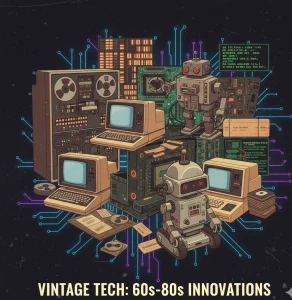
Early programs like ELIZA (a chatbot) and SHRDLU (a language understanding system) showed exciting potential.
-
Governments invested heavily in AI research.
1970s – The First AI Winter:
-
Progress slowed due to limited computing power and funding cuts.
-
Many promises of AI were not met, leading to decreased enthusiasm.
1980s – Expert Systems Rise:
-
AI made a comeback with “expert systems” — programs that mimicked human decision-making in specific fields like medicine or finance.
-
Companies began using AI for business applications, marking AI’s move into the commercial world.
5. The Modern AI Revolution: 1990s to Present
With the rise of the internet and powerful computers, AI entered a new era.
Key breakthroughs:
-
1997: IBM’s Deep Blue defeated world chess champion Garry Kasparov, proving machine intelligence in strategic thinking.
-
2000s: Machine learning and data-driven algorithms became dominant.
-
2010s: Deep learning and neural networks advanced rapidly, enabling voice assistants (like Siri and Alexa) and image recognition.
-
2020s: AI now powers self-driving cars, healthcare diagnostics, chatbots, and even creative tools like ChatGPT.
AI has moved from academic theory to real-world innovation, shaping industries and daily life.
6. Why Knowing AI’s History Matters
Understanding when AI started helps us appreciate how far technology has come — and where it’s headed.
Here’s why AI’s history is important:
-
It shows the evolution of human imagination and innovation.
-
It helps us learn from past limitations and failures.
-
It inspires new generations to explore ethical and responsible AI development.
-
It reminds us that AI is a human creation, guided by human purpose and control.
7. Conclusion
So, when did Artificial Intelligence start?
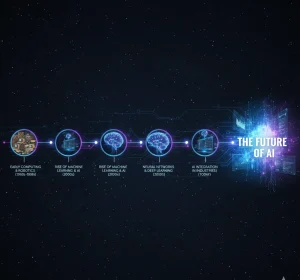
It began as an idea in the 1940s, was officially named in 1956, and has since evolved into one of the most transformative technologies of our time.
From Alan Turing’s theories to today’s intelligent systems, AI’s journey reflects the power of human curiosity and innovation.
As we move forward, the story of AI continues — one algorithm, one discovery, and one innovation at a time.
AI isn’t just the future — it’s a legacy that began decades ago and continues to redefine how the world works.